
Platform Engineering for SaaS Teams: Eliminating DevOps Bottlenecks in 2026
August 18, 2026
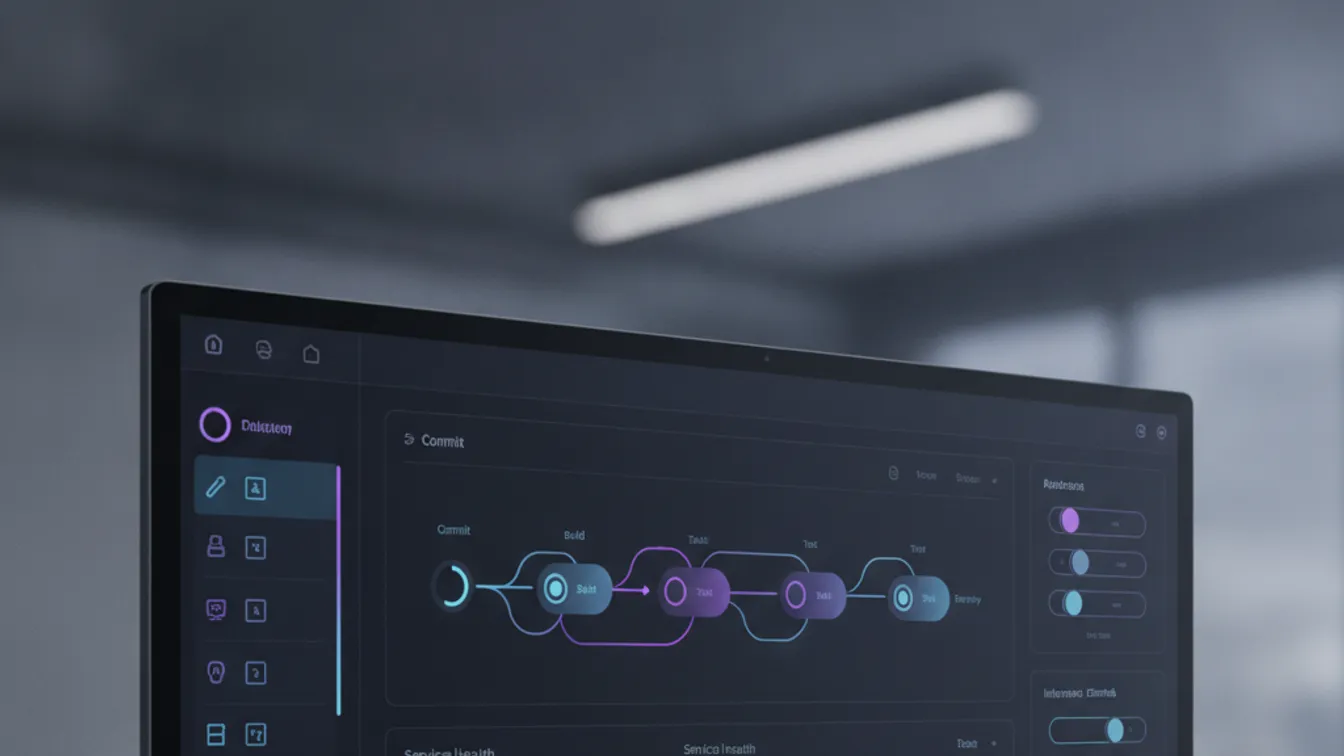
Every fast-moving SaaS team hits the same wall eventually. Engineers spend two days waiting on an environment setup. A hotfix stalls because the on-call DevOps engineer is unavailable. A new service takes a week to scaffold because every team does it differently. These are not engineering failures — they are symptoms of a missing layer between your product teams and your infrastructure: platform engineering.
Platform engineering is the discipline of building and maintaining an Internal Developer Platform (IDP) — a curated set of tools, workflows, and self-service capabilities that lets product engineers focus entirely on features, not infrastructure plumbing. In 2026, it has become the standard operating model for SaaS companies that want to scale engineering velocity without proportionally scaling their ops headcount.
What Platform Engineering Actually Is (And Isn’t)
Platform engineering is often mistakenly conflated with DevOps. They are related, but distinct. DevOps was a cultural shift — breaking down the wall between development and operations. Platform engineering is the product that makes that shift sustainable at scale.
A platform team treats developers as internal customers. They build:
- Self-service provisioning — developers spin up databases, queues, and environments on their own, without filing tickets
- Golden paths — opinionated, pre-built templates for services, CI/CD pipelines, and infrastructure that encode your team’s best practices
- Observability out of the box — every new service gets logging, metrics, and tracing wired in by default
- Policy as guardrails, not gates — security, cost controls, and compliance checks run automatically, not as manual approval steps
The key insight: a platform team doesn’t tell product engineers how to work. They make the right way the easy way.
Why SaaS Teams Specifically Need This
SaaS products have a particular scaling pattern that makes platform engineering essential. Early on, a small team moves fast with minimal process. But as you add engineers, services, and customers, complexity compounds in three ways:
Cognitive load explodes. Each new microservice adds documentation to maintain, environments to manage, and patterns to remember. Without a platform, every engineer carries a mental model of the entire system.
Release confidence erodes. As the system grows, fear of breaking production slows deployments. Teams ship less frequently — the opposite of what SaaS growth requires.
Onboarding becomes painful. New engineers take weeks to become productive because there is no standardized, well-documented way to get running.
Platform engineering addresses all three by centralizing infrastructure complexity into one team’s product surface, so every other team can consume it without understanding it.
The Core Capabilities of a Mature Internal Developer Platform
1. Service Catalog and Templates
A service catalog is a living inventory of every service your company runs — who owns it, what it depends on, how to reach it, and its current health status. Tools like Backstage (open-source from Spotify) are widely used to build this.
Paired with software templates, a new backend service can be scaffolded in minutes: repository created, CI/CD pipeline wired, observability configured, and a service card added to the catalog — all from a single form submission.
2. Self-Service Environments
One of the highest-leverage investments a platform team can make is on-demand preview environments. Every pull request gets its own ephemeral environment, complete with real infrastructure, spun up automatically and torn down after merge.
This eliminates “it works on my machine” debugging, unblocks QA from waiting for a staging slot, and gives product managers a live URL to review changes before merge. For SaaS teams shipping multiple times per day, this alone can dramatically compress release cycle times.
3. Unified CI/CD Abstractions
Instead of each team maintaining their own pipeline YAML, the platform team provides reusable pipeline templates. Teams declare what they want — “build a Node.js service,” “deploy to production with a canary” — and the platform handles the how.
This means security scanning, SAST, dependency checks, and compliance gates happen everywhere, consistently, without each team having to remember to add them.
4. Infrastructure as Code with Guardrails
Platform teams typically manage infrastructure through Terraform, Pulumi, or similar IaC tools, but expose only approved, tested modules to product teams. A developer requests “a Postgres database” through an approved module and gets one — correctly sized, encrypted, backed up, and tagged for cost attribution — without needing to know anything about the underlying cloud provider configuration.
5. Observability Platform
Logs, metrics, and distributed traces need to be unified across services for on-call engineers to diagnose incidents efficiently. A platform team configures and manages the observability stack (Prometheus, Grafana, OpenTelemetry exporters, log aggregation) and provides product teams with pre-built dashboards for common patterns. New services inherit this automatically via the golden path templates.
Measuring the Impact
Platform engineering investments pay off in measurable ways. Teams that invest in an IDP typically report:
- Faster lead time — time from commit to production drops, often significantly, as manual handoffs are replaced by automation
- Higher deployment frequency — self-service deployments remove the serialization bottleneck of waiting for ops support
- Shorter incident recovery — unified observability and runbook-linked alerts reduce mean time to recovery
- Lower onboarding time — new engineers become productive much faster when they have a golden path to follow from day one
The DORA metrics (Deployment Frequency, Lead Time for Changes, Change Failure Rate, Time to Restore Service) are the industry standard for tracking these improvements. A well-built IDP moves all four in the right direction.
Common Pitfalls to Avoid
Building a platform nobody asked for. Platform teams that build in isolation, without talking to their internal customers, end up with elaborate systems developers work around. Start with the top three pain points your engineers actually have, not the most technically interesting problems.
Over-abstracting too early. Golden paths should emerge from real usage patterns, not be designed upfront for every hypothetical use case. Build one path well, then expand.
Ignoring the product mindset. Platform teams that don’t treat their IDP as a product — with roadmaps, user research, and feedback loops — drift into building tooling for themselves. Treat internal engineers as users, run retros, and maintain a public roadmap.
Skipping documentation. A self-service platform is only as good as its documentation. Every golden path, every module, every runbook needs to be written clearly and kept current.
Where to Start
If your SaaS team doesn’t have a platform engineering function yet, you don’t need to build a full IDP on day one. Start with the highest-friction point in your current process. Common starting points:
- Standardize your CI/CD pipeline — create a shared template repository that encodes your deployment best practices
- Add self-service preview environments — pick a tool that integrates with your existing infrastructure
- Build a lightweight service catalog — even a well-maintained README index is a starting point
- Define one golden path — pick your most common service type (Node.js API, for example) and build a one-command scaffold for it
Assign ownership to a small team — even two engineers — with a clear mandate to treat this as a product. The leverage you get from freeing up every other engineer’s time compounds quickly.
Platform engineering is no longer a luxury reserved for companies the size of Google or Netflix. SaaS teams of twenty engineers face the same infrastructure complexity problems, just at smaller scale — and the same tools and principles apply.
If you’re ready to modernize your SaaS engineering infrastructure or want help building an internal developer platform that scales with your team, start a project with Nevrio — or talk to our engineering team about what’s holding your releases back.
