
Vertical SaaS in 2026: How to Build Industry-Specific Software That Dominates Its Market
August 10, 2026
Generic SaaS is a crowded market. Every category — project management, CRM, HR, analytics — has at least a dozen well-funded competitors, and the cost of switching between them is low. Selling into that environment means competing on price, running expensive acquisition campaigns, and accepting churn rates that make the unit economics painful.
Vertical SaaS takes a fundamentally different approach: instead of building for everyone, you build for one industry, deeply. You speak the language of that industry, automate its specific workflows, integrate with the tools it actually uses, and price accordingly. The result is a product that customers rarely leave — not because switching is hard, but because nothing else fits their world as well as yours does.
This guide covers what vertical SaaS is, why it tends to outperform horizontal tools on the metrics that matter, and what the development process looks like when you get it right.
What Makes a SaaS Product “Vertical”
A horizontal SaaS product solves a problem that exists across many industries — Slack, Salesforce, and Notion are examples. The problem (communication, CRM, note-taking) is universal, and the product is designed to be industry-agnostic.
A vertical SaaS product solves a problem that is deeply specific to one industry — a practice management system for veterinary clinics, a route-optimisation platform for last-mile delivery companies, or a credentialing and compliance tool for healthcare staffing agencies. The product embeds the vocabulary, the workflows, the regulatory constraints, and the integration patterns of that single industry.
The distinction matters because it changes almost every product decision: the feature roadmap, the data model, the compliance requirements, the sales motion, and the pricing model.
Why Vertical SaaS Is Winning in 2026
Several trends have converged to make vertical SaaS one of the strongest software models available right now.
Retention is structurally higher. When a product reflects an industry’s actual workflows — not a generic approximation of them — switching costs are real. Migrating from a general-purpose CRM to a purpose-built one is relatively low-friction; migrating from a vertical system that has 18 months of your industry-specific data, terminology, and configurations embedded in it is a project, not a decision.
Pricing power is real. A vertical SaaS product that handles the unique compliance requirements of a regulated industry — healthcare, finance, logistics — can price based on the value it delivers (avoided fines, reduced labour, faster regulatory approval) rather than competing on features with a generic tool.
AI integration is more tractable. Building useful AI features on top of generic SaaS is hard because the model doesn’t know your industry. Building AI features into a vertical product is tractable because the data is homogeneous: every record has the same structure, every term means the same thing, and fine-tuning or RAG-based retrieval is far more effective.
AI development costs are falling. Building a sophisticated vertical product used to require a large engineering team. Today, with AI-assisted development, the MVP-to-market timeline has compressed dramatically. A well-scoped vertical SaaS can reach its first paying customers in eight to twelve weeks.
Choosing the Right Vertical
The single most important decision in a vertical SaaS project is picking the vertical. The criteria that matter most:
Market pain, not market size. A vertical with 5,000 businesses that all have a painful, expensive, manual process is a better opportunity than a vertical with 500,000 businesses that are tolerating minor inconvenience. You want a market where the problem is acute.
Willingness to pay correlates with pain. Industries with high compliance costs (healthcare, financial services), high operational costs (logistics, field services), or high revenue per transaction (real estate, legal) tend to pay more for software that removes friction.
Reachability. Some verticals have dense industry associations, trade publications, and annual conferences — these become cost-effective distribution channels. Others are fragmented across geographies with no clear centre of gravity. Prefer the former.
Data defensibility. The best vertical SaaS products accumulate proprietary data that improves the product over time. A dispatch platform accumulates routing data that makes its route optimisation better than a generic algorithm. A healthcare platform accumulates clinical data that improves its care coordination features. This compounding effect is hard to replicate.
The Development Architecture for Vertical SaaS
Getting the technical architecture right early makes the difference between a product that scales with you and one that accumulates technical debt as you grow.
Multi-Tenancy from Day One
Vertical SaaS products almost always serve businesses, not individuals. The data model needs to support multiple tenants — each customer’s data isolated from every other customer’s — from the first line of code. Retrofitting multi-tenancy is painful; building it in from the start is not. The three standard patterns (database per tenant, schema per tenant, shared database with row-level security) each have distinct trade-offs, and the right choice depends on the regulatory requirements of your vertical and your expected tenant count.
Industry-Specific Data Models
The entity relationships in a vertical SaaS product are rarely well-served by a generic CRM or database schema. A veterinary practice management system needs to model patients (animals), owners, species, weight records, vaccination schedules, and controlled substance logs. None of those are well-represented in a generic contact or account object.
Invest time early in domain modelling with actual practitioners from your target industry. The goal is a data model that makes the industry’s natural language the application’s natural language. When a practitioner looks at the database schema and recognises the terminology, you’ve done it right.
Compliance and Regulatory Integration
Most high-value verticals have regulatory requirements that shape the product. Healthcare products in the US need HIPAA-compliant data handling. Financial products need SOC 2 and may need PCI DSS. Logistics products handling dangerous goods have their own documentation requirements.
These requirements are not optional add-ons — they’re core features, and they should be designed into the architecture rather than bolted on. Audit logging, encryption at rest and in transit, role-based access controls, data retention policies, and breach notification procedures all need to be first-class concerns from the beginning.
Integration Surface
Vertical markets have their own software ecosystems, and your product needs to fit into them. Healthcare has EHR systems (Epic, Cerner, Athena). Logistics has TMS platforms and carrier APIs. Retail has ERP systems and POS hardware. Ecommerce businesses run on Shopify, Magento, and a constellation of third-party fulfilment and inventory tools.
Your integration surface is part of the product. A vertical SaaS tool that doesn’t connect to the incumbent systems in its market will lose deals to one that does. Build the API integrations that matter to your buyers, and build them with the same quality as the core product — a flaky integration is worse than no integration.
Workflow Automation That Reflects Reality
The leverage in vertical SaaS comes from automating workflows that are currently manual, error-prone, or time-consuming in the target industry. This requires deep understanding of the actual workflows — not as you imagine them, but as practitioners experience them day to day.
The most effective development process for this is to embed with actual users early and often. Watch how they work. Map the actual sequence of tasks, not the idealised version. Find the places where people maintain spreadsheets alongside the existing software, where they copy data between systems, or where they rely on tribal knowledge to fill gaps. Those are the automation opportunities that justify the highest pricing.
Go-to-Market for Vertical SaaS
The go-to-market motion for vertical SaaS is structurally different from horizontal SaaS.
Community-led distribution. Every vertical has communities — industry associations, online forums, LinkedIn groups, trade publications, annual conferences. These are your distribution channels. A single feature story in the trade publication your entire target market reads is worth more than a year of generic content marketing.
Reference customers, not acquisition volume. In a tight-knit vertical, reputation spreads quickly. Three well-known reference customers who will speak at the industry conference on your behalf are worth more than 300 signups from paid acquisition. Build your early customer list with referenceable names from the vertical.
Pricing to value, not market. Because the ROI of your product is often calculable — hours saved per week, compliance fines avoided, revenue recovered — you can price based on that value rather than on what generic SaaS tools charge. The best vertical SaaS products charge significantly more than horizontal alternatives and have lower churn than horizontal alternatives. Both are true at the same time.
When to Build Vertical SaaS vs. Build a Vertical Feature
Not every vertical opportunity requires building a new product. Sometimes the right answer is to build industry-specific features on top of an existing platform — a Salesforce implementation for a specific vertical, a Shopify app for a specific merchant category, or a plugin for an existing vertical tool.
Build a standalone vertical SaaS product when: the workflow divergence from general-purpose tools is large enough that the integration overhead exceeds the cost of building from scratch; when the regulatory requirements are incompatible with the hosting and data handling of generic platforms; or when the go-to-market advantage of owning the brand and the customer relationship outweighs the distribution advantage of building on an existing marketplace.
Build a feature or integration when: the workflow divergence is modest; the target market is already concentrated on a single platform; and speed to market is the primary constraint.
Where to Start
The best place to start a vertical SaaS project is not with code. It’s with conversations — with people in the target industry who have the problem you think you’re solving. Before writing a line of code, you should be able to answer: What does the current workflow look like in detail? What does a day in this person’s life look like? Where does the existing software fall short? What would have to be true for them to pay for a new tool?
Once you have clear answers, the path to an MVP is well-defined: a tight data model reflecting the industry’s actual entities, a set of core workflows that eliminate the most painful manual steps, the integrations the industry’s incumbents require, and the compliance posture the regulatory environment demands.
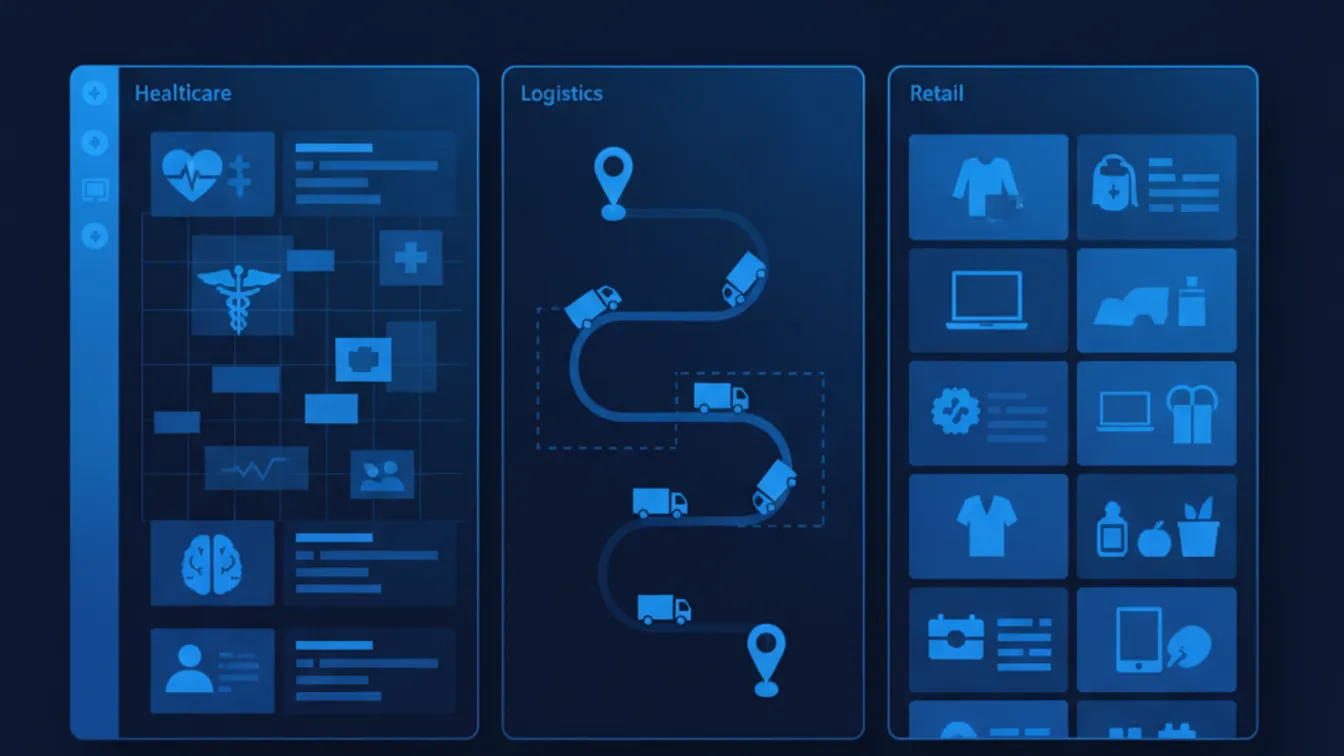
Start building your vertical SaaS with a team that has shipped industry-specific products in healthcare, logistics, and retail. Nevrio helps founders and product teams move from domain expertise to working software — fast.
